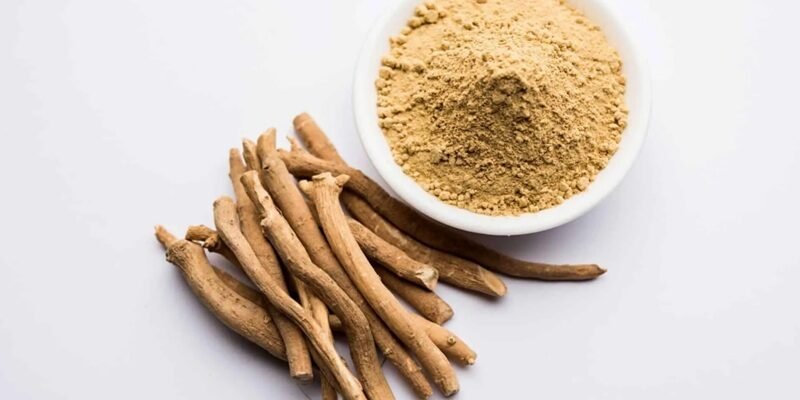
The Withania somnifera vs Indian ginseng question is about naming, not three separate versions of the same supplement. Withania somnifera is the accepted botanical name for the plant commonly called ashwagandha. Indian ginseng is an alternative name used in some educational and commercial contexts, but ashwagandha is not a member of the true ginseng genus.
These terms may refer to the same plant in general conversation. They are not equally precise on a supplement label. The botanical name identifies the species, while the other terms depend on language, tradition, market, and local labeling rules.
Secrets Of The Tribe uses a name-first approach to botanical labels: confirm the Latin binomial before interpreting a common or alternative name. This avoids transferring the identity or characteristics of true ginseng to ashwagandha.
- What is the direct answer?
- What does Withania somnifera mean on a label?
- Genus and species
- Author citation
- Label formatting
- What does Ashwagandha mean?
- Common-name function
- Common-name limitations
- Plant-part information
- Why is Ashwagandha called Indian ginseng?
- Informal naming
- Taxonomic separation
- Consumer confusion
- Is Indian ginseng acceptable on a United States supplement label?
- Standardized common name
- Global differences
- Practical buyer rule
- How is Withania somnifera different from Panax ginseng?
- Do all three names prove that two products are equivalent?
- Plant part
- Preparation
- Serving amount
- Standardization
- Batch identity
- What should you verify in the Supplement Facts panel?
- What safety context should name matching include?
- Botanical Name Matching Checklist
- Find the Latin binomial
- Match the common name
- Question the ginseng wording
- Verify the plant part
- Identify the preparation
- Compare the serving
- Check traceability
- FAQ
- Are Withania somnifera and ashwagandha the same plant?
- Is Indian ginseng the same as ashwagandha?
- Is ashwagandha a type of Panax ginseng?
- Why do some sources call ashwagandha Indian ginseng?
- Can Indian ginseng appear on a United States supplement label?
- What name should I trust on an ashwagandha label?
- Does matching the botanical name make two products equivalent?
- What family does ashwagandha belong to?
- Glossary
- Conclusion
- Sources Used
What is the direct answer?
Withania somnifera and ashwagandha normally refer to the same botanical species. Indian ginseng is also used as an alternative common name for that species, but it does not mean the ingredient is Panax ginseng.
A label that says only “Indian ginseng” is less precise than one that states Withania somnifera. In the United States, the term “ginseng” has a specific regulatory restriction for foods and dietary supplements. It may represent plants in the genus Panax, not Withania.
| Name | Name type | Usual botanical reference | Label precision |
|---|---|---|---|
| Withania somnifera | Botanical name | Withania somnifera | High |
| Ashwagandha | Common name | Withania somnifera | Useful when paired with the botanical name |
| Winter cherry | Alternative common name | Often Withania somnifera | Needs botanical confirmation |
| Indian ginseng | Alternative or informal name | Often intended to mean Withania somnifera | Potentially confusing and jurisdiction-dependent |
| Asian ginseng | Standardized common name | Panax ginseng | Identifies a different botanical |
What does Withania somnifera mean on a label?
Withania somnifera is the Latin binomial used to identify the species. Royal Botanic Gardens, Kew recognizes Withania somnifera (L.) Dunal as an accepted species in the genus Withania and the family Solanaceae.
Genus and species
The first word, Withania, identifies the genus. The second word, somnifera, identifies the species within that genus. Together, they provide more precision than a common name alone.
Author citation
The expanded form Withania somnifera (L.) Dunal includes a botanical author citation. “L.” refers to Carl Linnaeus, who published an earlier classification. “Dunal” refers to Michel Félix Dunal, who published the accepted combination in the genus Withania.
Label formatting
Botanical names are conventionally italicized. The genus begins with a capital letter, while the species name uses lowercase. Packaging may omit italics because of design limitations, but the spelling should remain clear.
The botanical name does not reveal the plant part, extraction method, serving amount, or concentration. Those details require separate label fields.
What does Ashwagandha mean?
Ashwagandha is the widely recognized common name for Withania somnifera. The name comes from Sanskrit and appears in discussions of Ayurvedic tradition, botanical products, and dietary supplements.
Common-name function
A common name makes an ingredient easier to recognize. It can appear on the front panel, product title, Supplement Facts panel, or ingredient list. A careful label connects the familiar term with the botanical identity.
Common-name limitations
Common names can vary by language and region. The same plant may have several common names, while one common name may sometimes be applied to more than one plant. The Latin binomial reduces this ambiguity.
Plant-part information
The word “ashwagandha” does not tell you whether the product contains root, leaf, or a combination. Look for wording such as root, dried root, root extract, leaf extract, or root-and-leaf extract.
A real-world product page from Secrets Of The Tribe connects the common name ashwagandha with Withania somnifera and identifies dried root as the botanical material. The useful feature is the explicit name mapping, not an assumption about personal suitability.
Why is Ashwagandha called Indian ginseng?
Indian ginseng is an alternative name based on broad comparisons made in traditional and commercial contexts. It does not indicate a taxonomic relationship with true ginseng. Ashwagandha and Panax ginseng belong to different genera and plant families.
Informal naming
Alternative names often develop because plants occupy similar cultural or product categories. This does not make their botanical identities, chemical profiles, serving amounts, or supporting evidence interchangeable.
Taxonomic separation
Withania somnifera belongs to the genus Withania and family Solanaceae. Panax ginseng belongs to the genus Panax and family Araliaceae. They are separate botanical species.
Consumer confusion
A shopper may read “Indian ginseng” and assume the product contains a regional type of Panax. That assumption is incorrect. The botanical name should settle the identity question.
Is Indian ginseng acceptable on a United States supplement label?
It can create a regulatory problem. United States law states that a food or dietary supplement cannot represent an ingredient as ginseng unless the botanical belongs to the genus Panax. Withania somnifera belongs to a different genus.
This means that “Indian ginseng” may appear in botanical databases or general educational material as an alternative common name, yet still be unsuitable as the declared identity of a United States dietary supplement ingredient.
Standardized common name
FDA guidance directs botanical ingredients toward standardized common names. When an appropriate common name is unavailable, the Latin binomial provides the required identity.
Global differences
Botanical naming rules differ across countries. An alternative name accepted in one market may be restricted or discouraged in another. Importers and manufacturers need market-specific regulatory review.
Practical buyer rule
When a product uses “Indian ginseng,” locate the botanical name. If the label says Withania somnifera, the ingredient is ashwagandha, not Panax ginseng. If no botanical name appears, request clarification before comparing it with other products.
How is Withania somnifera different from Panax ginseng?
The two names identify different plants. They should not be treated as interchangeable ingredients, even when marketing language places them in similar categories.
| Field | Ashwagandha | Asian ginseng |
|---|---|---|
| Accepted botanical name | Withania somnifera (L.) Dunal | Panax ginseng C.A.Mey. |
| Genus | Withania | Panax |
| Plant family | Solanaceae | Araliaceae |
| Common label name | Ashwagandha | Asian ginseng |
| Commonly discussed marker groups | Withanolides | Ginsenosides |
| Interchangeable identity | No | No |
A statement about Panax ginseng should not be transferred to Withania somnifera based on the words “Indian ginseng.” The same rule applies in the opposite direction.
Do all three names prove that two products are equivalent?
No. Matching species names establish botanical identity, not complete product equivalence. Two ashwagandha supplements can use the same species while differing in plant part, extraction method, serving size, carrier, concentration, and testing.
Plant part
Check whether the product uses root, leaf, or root-and-leaf material. The chemical composition of root and leaf differs, so this field matters when comparing labels.
Preparation
A tincture, glycerite, dry extract, root powder, and standardized extract are different preparations. The common name does not identify which one is present.
Serving amount
Compare the declared amount per serving in milligrams or milliliters. Bottle size, capsule count, and front-panel language do not establish equivalent servings.
Standardization
Some extracts declare a withanolide percentage or amount. Standardization describes a measured marker specification. It does not make products with different plant parts or extraction methods identical.
Batch identity
A lot-linked laboratory report can provide additional evidence about botanical identity and declared specifications. A general “tested” statement does not show which analyses were completed.
What should you verify in the Supplement Facts panel?
Start with the botanical name or standardized common name. Then read the plant part, preparation, amount per serving, and other ingredients.
- Identity: Ashwagandha or Withania somnifera
- Plant part: Root, leaf, or root-and-leaf
- Preparation: Powder, tincture, liquid extract, or dry extract
- Serving: Milligrams, milliliters, drops, capsules, or tablets
- Standardization: Declared marker percentage or amount, when used
- Other ingredients: Alcohol, water, glycerin, capsule material, flavors, or additives
- Traceability: Manufacturer details and lot code
The front panel may use a familiar common name for readability. The information panel should provide enough detail to verify exactly what that name represents.
What safety context should name matching include?
Confirming that three names refer to the same plant does not show that a product is suitable for a particular person. Preparation, serving amount, duration, medication use, and individual health factors still matter.
Ashwagandha preparations may cause drowsiness, stomach upset, diarrhea, or vomiting in some people. Rare reports have linked ashwagandha supplements with liver injury. Long-term safety information remains limited.
The National Center for Complementary and Integrative Health advises against use during pregnancy and breastfeeding. Professional guidance is also important before surgery and for people with thyroid or autoimmune conditions.
Possible interactions include sedatives, anticonvulsants, thyroid hormone medicines, immunosuppressants, and medicines used for blood pressure or blood sugar management. Ask a physician or pharmacist to assess the specific product and your medication list.
Botanical Name Matching Checklist
Use this checklist when a label presents several names for one botanical. The goal is to confirm species identity before comparing plant parts, concentrations, or serving directions.
Find the Latin binomial
Look for Withania somnifera. This is more precise than an alternative common name.
Match the common name
Confirm that ashwagandha refers to the same botanical entry. Do not rely on front-panel wording alone.
Question the ginseng wording
Do not assume that Indian ginseng belongs to the genus Panax. Check the botanical name and local labeling rules.
Verify the plant part
Locate root, leaf, or root-and-leaf beside the botanical ingredient. The name ashwagandha does not provide this detail.
Identify the preparation
Determine whether the product contains a tincture, powder, liquid extract, or dry extract.
Compare the serving
Use the declared milligrams or milliliters per serving. Do not compare products by bottle size or name alone.
Check traceability
Find the manufacturer details and lot code. Review batch-specific identity information when available.
FAQ
Are Withania somnifera and ashwagandha the same plant?
Yes. Withania somnifera is the botanical name, while ashwagandha is its widely used common name.
Is Indian ginseng the same as ashwagandha?
Indian ginseng is an alternative name sometimes used for ashwagandha. It does not mean the plant belongs to the true ginseng genus.
Is ashwagandha a type of Panax ginseng?
No. Ashwagandha belongs to the genus Withania, while true ginseng belongs to the genus Panax.
Why do some sources call ashwagandha Indian ginseng?
The name reflects informal cultural or commercial comparison, not botanical classification.
Can Indian ginseng appear on a United States supplement label?
United States law restricts ginseng wording for foods and supplements to botanicals in the genus Panax.
What name should I trust on an ashwagandha label?
Use Withania somnifera to confirm species identity. Then verify the common name and plant part.
Does matching the botanical name make two products equivalent?
No. Products can differ in plant part, preparation, concentration, serving amount, other ingredients, and testing.
What family does ashwagandha belong to?
Ashwagandha belongs to Solanaceae. Panax ginseng belongs to the separate family Araliaceae.
Glossary
Accepted name
The scientific name currently recognized for a botanical species by a taxonomic authority.
Alternative name
An additional informal or regional name used for a botanical.
Botanical name
A scientific name identifying a plant’s genus and species.
Common name
A familiar non-scientific name used in everyday language or commerce.
Genus
A taxonomic group containing one or more related species.
Latin binomial
A two-part botanical name consisting of genus and species.
Plant part
The portion used in a product, such as root, leaf, seed, or bark.
Standardized common name
A common name selected by an accepted reference for consistent ingredient identification.
Synonym
An alternative scientific name that has been applied to the same taxon.
Conclusion
Withania somnifera and ashwagandha identify the same species, while Indian ginseng is an imprecise alternative name that should not be confused with Panax ginseng. Confirm the botanical name first, then verify plant part, preparation, serving amount, and batch identity.
Sources Used
- Accepted botanical name, classification, and common names for ashwagandha, Plants of the World Online – powo.science.kew.org/taxon/urn:lsid:ipni.org:names:821709-1
- Accepted botanical name and classification for Asian ginseng, Plants of the World Online – powo.science.kew.org/taxon/urn:lsid:ipni.org:names:91472-1
- Ashwagandha, Withania somnifera, Indian ginseng, and winter cherry name mapping, NIH Office of Dietary Supplements Consumer Fact Sheet – ods.od.nih.gov/factsheets/ashwagandha-Consumer
- Ashwagandha taxonomy, plant parts, and safety context, NIH Office of Dietary Supplements Health Professional Fact Sheet – ods.od.nih.gov/factsheets/Ashwagandha-HealthProfessional
- Common and Latin names for botanical supplement ingredients, FDA Small Entity Compliance Guide – fda.gov/regulatory-information/search-fda-guidance-documents/small-entity-compliance-guide-statement-identity-nutrition-labeling-and-ingredient-labeling-dietary
- Dietary supplement identity-statement requirements, FDA Dietary Supplement Labeling Guide Chapter II – fda.gov/food/dietary-supplements-guidance-documents-regulatory-information/dietary-supplement-labeling-guide-chapter-ii-identity-statement
- United States restriction on ginseng naming for non-Panax ingredients, FDA Import Alert 54-12 – accessdata.fda.gov/CMS_IA/importalert_143.html